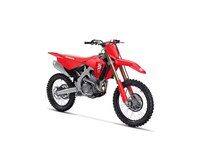
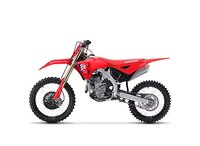
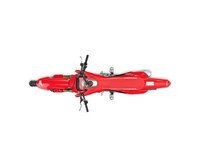
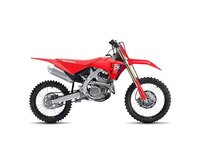
2026 Honda CRF250R
|
|
|
Specifications
|
Model |
CRF250R
|
Category Name |
Motorcycles
|
Year |
2026
|
|
Stock Number |
H10914
|
Sale Type |
New
|
Manufacturer |
Honda
|
|
Vin |
JH2ME1225TK800171
|
Color |
RED
|
Class |
M
|
|
Freight |
500
|
CodeName |
MOTORCYCLE
|
Model Code |
CRF250RT
|
|
Titlestatus |
CLEAN
|
Unitcondition |
EXCELLENT
|
Tires |
Front: 80/100 - 21 Rear: 100/90 - 19
|
|
Brakes |
Front: 260 mm disc Rear: 240 mm disc
|
Warranty |
No warranty
|
Wheelbase |
1,483 mm (58.4 in)
|
|
Curb Weight |
106 kg (234 lb)
|
Engine Type |
Liquid-cooled single-cylinder
|
Final Drive |
#520 chain; 13T/50T
|
|
Seat Height |
955 mm (37.6 in)
|
Valve Train |
DOHC, four valves
|
Displacement |
249 cc
|
|
Transmission |
Five-speed
|
Bore & Stroke |
79 mm x 50.9 mm
|
Fuel Delivery |
PGM-FI electronic fuel injection with 44 mm throttle bore
|
|
Fuel Capacity |
6.3 litres
|
Rear Suspension |
Pro-Link® system; fully adjustable Showa single shock; 313 mm (12.3 in) travel
|
Front Suspension |
49 mm fully adjustable leading-axle inverted telescopic Showa® SPG coil-spring fork; 273 mm (10.7 in) travel
|
|
Ground Clearance |
330mm (13.0 in)
|
Compression Ratio |
13.9:1
|
Price |
11,559 CAD
|
| |
|
|
|
Description
Honda CRF250R Competition Dirt Bike
The Honda CRF250R stacks the deck when it comes to torque and midrange power – especially where you really need it for critical track sections like whoops, managing jumps, or blasting out of deep loam and berms. Honda Racing team riders choose the CRF250R, and it’s a proven winner!
|
|
|
ADDITIONAL FEATURES
|
Additional_Features
 Electric Start Electric Start
Convenient and lightweight, the electric starter is a huge advantage if you need to restart the engine in the heat of battle. Like the rest of the bike, the lithium-ion battery is both super light and high performing, weighing less than half that of a conventional lead-acid battery.
|
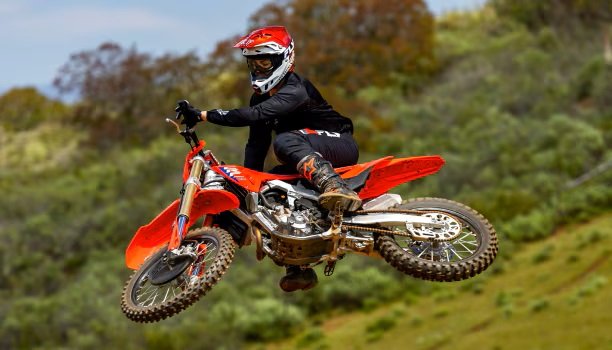 Cool Running Cool Running
Another way the CRF250R keeps its cool: a large radiator, with fins that are angled for efficient airflow.
|
|
|
ENGINE & DRIVETRAIN
|
Engine_&_Drivetrain
 Downdraft Intake and Exhaust Downdraft Intake and Exhaust
The combination of 79 mm bore and short 50.9 mm stroke produces a high-revving engine with plenty of room for large titanium valves. The engine breathes and revs — the keys to making power. As well, the DOHC cylinder-head design let our engineers straighten out the intake and exhaust tracts to improve power and response. The intake is short and just about arrow straight, and the exhaust flows efficiently too. You’ll experience serious power and throttle response.
|
 Plenty of Torque Plenty of Torque
More torque at low revs means better drive out of corners, so the shape of the piston and connecting rod, as well as valve timing, is optimized for combustion consistency and thereby exhaust efficiency at lower revs. The bridged-box design of the piston uses a reinforcing structure between the skirt and the wrist-pin bosses that helps enable a high redline. Big torque down low, huge power up top. A winning formula.
|
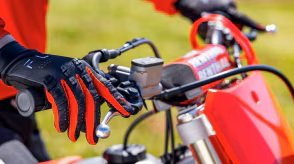 Durable Clutch Durable Clutch
The CRF250R uses a nine-plate design to improve durability and hookup. That means less slip at peak horsepower, better torque transmission through the clutch pack, and greater durability. Clutch pull remains light and engagement is easy to modulate.
|
 HSTC HSTC
Honda Selectable Torque Control (HSTC) works to minimize rear wheel spin (thus wasted forward drive) and maximize traction. It doesn’t use a wheel-speed sensor, and, importantly, maintains feel at the throttle while managing power — ignition timing and the PGM-FI system are adjusted when the rate of change of RPM goes over a set amount. With three settings plus off to choose from, you can have your bike dialed no matter how much traction there is.
|
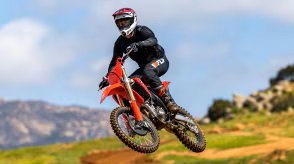 Better Breathing Better Breathing
To help the CRF250R breathe more freely, engineers redesigned the entire air-intake system. A new airbox, new filter position, and new intake funnel combine to reduce restrictions to airflow. The result? Better throttle control and more consistent power delivery.
|
 Exhaust Efficiency Exhaust Efficiency
In combination with its less-restrictive air-intake system, the CRF250R’s exhaust system, designed for straighter airflow, delivers smoother engine operation in the mid- to high-rpm range and more-controllable acceleration.
|
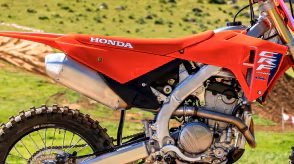 Single Muffler Single Muffler
The single muffler exhaust uses a pressed-alloy design for better rider ergonomics and lighter weight. The CRF250R naturally uses a single-pipe header. It routes close to the center of the bike, and its light overall construction helps improve weight distribution.
|
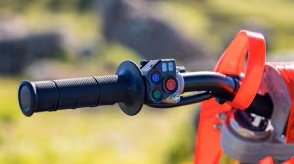 HRC Launch Control HRC Launch Control
HRC Launch Control: push the button to select the mode, hold the throttle open, release the clutch, and the bike will do the rest, launching you into the first turn with a big advantage.
|
 Engine Mode Select (EMS) Engine Mode Select (EMS)
This simple handlebar-mounted button lets you dial in engine power delivery character with a push of your thumb. Choose between Standard, Smooth, and Aggressive, depending on track conditions.
|
 ECU Settings ECU Settings
Our engineers never stop searching for ways to make it easier to go faster. Revised ECU settings combine with the other chassis and powertrain improvements to make the CRF250R an all-around better performer.
|
|
|
CHASSIS & SUSPENSION
|
Chassis_&_Suspension
 Aluminum Fram Aluminum Fram
The CRF250R’s aluminum frame has improve torsional and lateral rigidity in every direction, resulting in more-controlled and predictable handling — particularly in rough conditions.
|
 Showa Fork Showa Fork
To complement the updated frame, the CRF250R also features a Showa fork with significant changes throughout, from the outer tube to the axle. These adjustments improve low-speed damping, reduce friction, and enhance rigidity—delivering better control and quicker lap times.
|
 Easier Shock Access Easier Shock Access
When you’re riding, you’ll appreciate the revised Pro-Link rear suspension that’s less prone to flexing, and the redesigned shock with smoother action. When you’re wrenching, you’ll love the new ease of access to the rear suspension assembly. Removing the shock used to take about 21 minutes, by our watch, but can now be done in about nine minutes. No more removing the seat, muffler and rear frame.
|
 Short Swingarm Short Swingarm
The CRF250R’s short swingarm helps make it light, and also improves rear-wheel traction and reduces unsprung mass — important considering how much power is on tap.
|
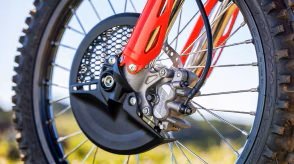 Large Front Brake Large Front Brake
The large front-brake disc measures a whopping
|
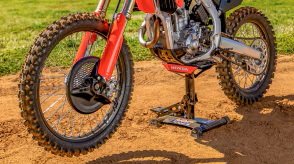 Black Rims Black Rims
They may not help you go faster, but the black D.I.D® rims sure look good.
|
|